Showing posts with label Ornette Coleman. Show all posts

Monday, 19 June 2017

Terry Riley Don Cherry Duo


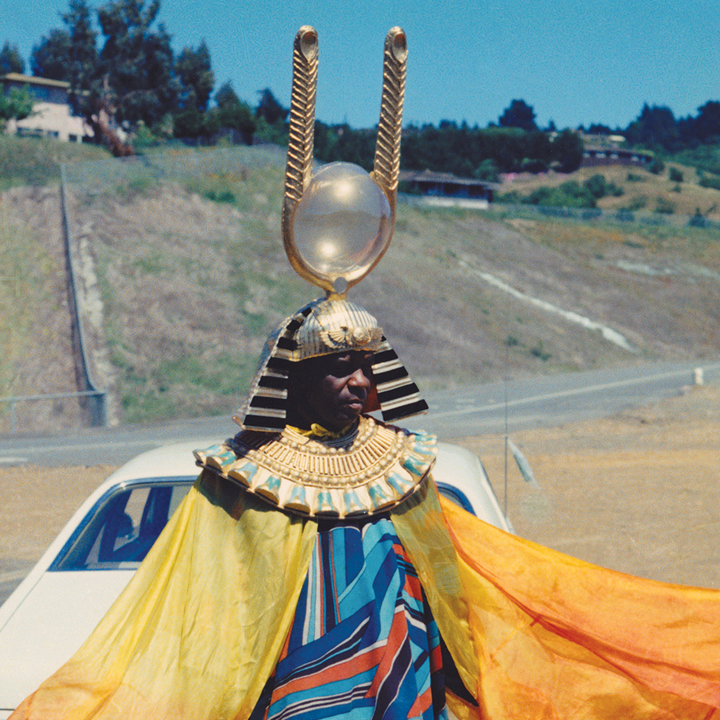
Calling all Planetary Dream Collectors, it is time to whirl dervish-like to the sound of Terry Riley and Don Cherry - and as the world spins around the axis we form, for once the terrible, chaotic blur of events (should you live in London especially) will dissolve, be dissolved by sound that is both moving (literally) and centred in a harmonious cyclical dance, enough to entrance and calm the most troubled minds. Riley's cosmic fugues defy/deny time, seemingly expanding it even as it is precisely measured, the opposite of waiting or watching, in his music every module measures what feels like instantaneous moments in an eternal flow. 

As I say that, I'm in danger of sounding as if I have indulged in mind-expanding drugs just as Riley did in the 60s. No matter, whatever it took to open and walk through the doors of perception it may or may not have created this sound as much as made it possible. Who knows? Did Charlie Parker need a fix to attain his sense of higher improvisational capabilities? Surely he was capable anyway, but can an artist and his life be severed so easily?

Here, on the first track, The Descending Moonshine Dervishes, fellow traveller of celestial roads, Don Cherry, proves himself a worthy partner, a man who was, as his track record proves, a free-ranging artist. So it is no surprise that his voice, although in some ways contrary to the rhythmic precision of Riley's, beautifully contrasts the cyclical pace. I'm reminded of the way Miles Davis would add restrained yet potent dimensions to sometimes frenzied collective noise. Here he may hold a note or mimic the bubbling keyboards. Whatever he blows it is in tune with Riley; you sense him listening and reacting.

Sunrise of the Planetary Dream Collector is Riley alone. I'm struck by the 'sacred' opening, as if a service is about to begin - or has ended? I shy away from religious analogies in music, usually, for fear of lending too much weight to something. Having said that, I confess to having 'preached' the virtues of John Coltrane (and countless others) in the past. I may even have said that whilst I worship no recognised (in the religious sense) god, I kneel (metaphorically) before the speakers when playing Ornette Coleman's The Shape Of Jazz To Come which, as I'm sure you know, also happens to feature Don Cherry.

Meanwhile, these two 'sermons' are worthy additions to your collection. It is sometimes hard to focus on sanity and this music, whilst taking you 'away', also has a unique kind of healing force of its own. You can buy it at Soundohm

Saturday, 18 June 2016

New Music Mix: Watching Time In Night's Garden


Not done one for a while so I returned to the virtual decks (to think, I used to transport physical versions around town - oh that seems so long ago). Quick choices made for this, rather than the usual planned out mood and mixing (what? you didn't notice? you bastard!). So there's jazz rubbing up against electronic and other gems. Do enjoy...that's an order...


1.INTRO
2.Paintbrushes by Dolly Dolly
3.fluxo by jorges antunes
4.smell down death by yannis kyriakides
5.V1 (Ossian remix)  by silver waves
6.texte 2 by andre boucourecliev
7.gozel guzler by lloyd miller
8.watching time in night's garden by sid redlin
9.magic words command by richard h kirk
10.In A Trap byAfrican Head Charge
11.untitled no.7 by new 7th music
12.marz society by griot galaxy
13.melted percussions by gultskra artikler
14.baby food by ornette coleman
15.UNKNOWN

Friday, 27 November 2015

Black Friday!


This is what I mean...not buying more worthless shit...


Thursday, 11 June 2015

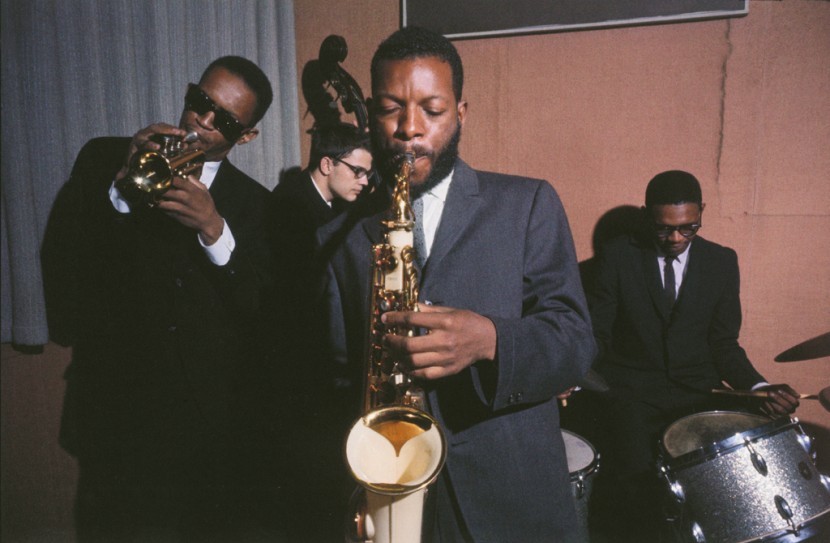
Ornette Coleman, March 9, 1930 - June 11, 2015


Tomorrow was the question few musicians could answer in 1959 - can they ever? Posing it was everything then (1959) and now, except that now tomorrow looks stale in the state of Jazz. Excuse my cynicism but the death, today, of Ornette Coleman, serves to remind me of how much what he did meant and how little promise there seems to be today. A typical classicist's complaint - 'It's all been done'. Perhaps for the mouldy old figs Ornette never did achieve 'classic' status, but as you know, if it was up to them everyone would still be playing Swing and Trad, never mind Be-Bop. 

I'm not one for long eulogies when a favourite musicians dies; so much recognition of such events on the social network smacks of 'Look how hip I am to know blah-blah'. Yet when you've been listening to someone for over 30 years and seen them 'live' a few times, it's hard to resist saying something. Well, forget how 'cool' liking Ornette Coleman may be, the simple fact is that he meant, still means a hell of a lot in my listening world. I'll be listening to him for as many tomorrows as I have left. No question about that. 


Monday, 20 April 2015

Me & Giacometti / Architecture / Ornette Coleman / The Magazine


One of these figures is by Giacometti and the other is by my parents.

***


Our local...it's neo-brutal post-modern exterior reflects the prices within perfectly, reflecting as it does the sense of foreboding and despair when awaiting the price of your bill...

***

Now something positive, the Ornette Coleman box set Beauty Is A Rare Thing has been reissued (and repackaged), the only negative being that they couldn't come up with something different to celebrate his recent 85th birthday. I suppose, unlike Miles Davis, there's not a lot of unheard treasures buried in the vaults? I can't find it for sale yet but it may be cheaper than the original. Or not. In which case, that's a handsome thing to have sitting on your shelf. The music's not bad either.


***


One of the prints that was included in the magazine. Thanks to those of you who haven't bought it because I couldn't have made many more without going nuts at the printer. Those who did, thanks also. A few more are available. Only a few...

TTFN


Thursday, 18 September 2014

When Dinosaurs Ruled The Racks - 5 Essential Music Box Sets


Box sets are big, stupid and outmoded. Right? Not in the homes of a generation old enough to have bought LPs first time 'round and when the CD box sets started coming collect them too because many contained previously unreleased tracks. And besides, what else were baby boomers going to spend their money on? 

Box sets were exciting for others too, of course, myself included. But to confess that is also to confess to being of certain age, probably. Do kids buy box sets? No, surely not. Many can be downloaded anyway. I'm not precious about sleeve notes and packaging, but they're seen as a bonus by some. 

A box set signifies the old world, the last hurrah of music companies still creating cash from the vaults. Pony-tailed executives rubbing their hands with glee as yet another take of a track is dusted off - ''The suckers'll lap it up!". 

Yet there's something appealing about these digital dinosaurs. They sit heavily (literally) in a world where music is weightless. They defy this anti-gravity world of one-click access and the virtually invisible file storage system where recordings exist in name alone (lost amongst all the others). Almost every day I catch sight of the boxes below. Admittedly this is because I no longer have a large CD collection.

So here are some of my favourites.

Bernard Parmegiani - L'Œuvre Musicale (INA)

Acousmatic/electronic/tape genius. An infinite world of sound.


 Miles Davis - The Complete Jack Johnson Sessions (Columbia Legacy)

Of the many Miles Davis box sets, this is the one I play most often. Electric voodoo. 


Various ‎- Popular Electronics: Early Dutch Electronic Music From Philips Research Laboratories (Basta)

Tape/electronic genius.


Ornette Coleman - Beauty Is A Rare Thing: The Complete Atlantic Recordings (Rhino Records)

Arranged as the sessions were recorded. It's Ornette Coleman.


Duke Ellington - Anniversary (Masters Of Jazz)

13-disc epic feast of Ellington. A gift (from myself) that keeps on giving.


Thursday, 11 September 2014

Jackson Pollock and Ornette Coleman's Lonely Woman


Ornette Coleman's Lonely Woman was used during the BBC Four documentary, The Rules of Abstraction with Matthew Collings, for the Jackson Pollock sequence. A good fit, although Lonely Woman wasn't recorded until 3 years after Pollock's death, but let's not be picky. Still, I can't help thinking about whether music chosen to accompany clips from the past does fit, time-wise. In that sense, perhaps a Thelonious Monk tune would have been better, but who cares or thinks about that kind of thing? Whatever, the usage made me fall in love with the tune all over again.

Here's Collings standing in front of Pollock's Number 32, which is supposedly abstract, but quite clearly contains a figurative element in the form of a horse's head. I'm surprised few critics have pointed this out. Collings talks of structure and control to counter those who think Jack The Dripper was merely working in a random fashion, but doesn't mention the horse. Pollock obviously included it in part as a joke, but also to represent the country life and freedom it symbolised as opposed to claustrophobic (New York) city pressure. That or the equine element occurred purely by chance. Surely not.


Perhaps Pollock's organised 'chaos' is in tune with Ornette Coleman's sound. After all, both were despised, to some extent, for breaking the rules; one making a visual racket, the other a sonic one to many ears. Yet both are now regarded as legends in their respective art forms. And, of course, both still puzzle those for whom painting should represent something that's easily recognisable and music should be melodic, or harmonious, or whatever constitutes 'normal'.

Lonely Woman does contain one of the greatest melodies ever written in Jazz, it just does so in a wayward fashion. It's as if the Free land that was only a year away for Coleman and, later, many others, is already calling, just about to be approached. Lonely Woman lives on the border between old constraints and that vast open territory, the abstract expression of sound.

Perhaps Ornette believed he was forging The Shape Of Jazz To Come when, in 1959, he made the album of the same name which features Lonely Woman. Or was he being ironic? Either way, it remains one of the best album titles ever, as well as a musical masterpiece. The title as a put-down to all the critics? It is not the shape they wanted Jazz to be in, but here it is anyway as offered by Ornette Coleman's quartet.


Being incredibly hip as well as Cool personified, the Modern Jazz Quartet were amongst the first to recognise the genius of Ornette Coleman and specifically Lonely Woman, which they covered on their 1962 album of the same name. To call it a 'cover' does not do it justice. It is both homage to Ornette and a brilliant arrangement in itself...


If anyone had the right to play their version of the tune it is Charlie Haden, who played the stunning opening to the original. Here he is playing it solo...

Thursday, 17 July 2014

Ornette Coleman's Virgin Beauty - Welcome Home Old Friend


Thankfully, when it's very hot like it is today, you can always find shade in the canyons of this concrete jungle called London. Ornette made a track called The Jungle Is A Skyscraper for the Science Fiction album, cleverly inverting the common analogy...'cause he's clever.

Another advantage of living here is the amount of charity shops. I called in a regular haunt today and found this old friend on vinyl. We hadn't met for about 20 years. Good albums are old friends, aren't they? Unlike the human variety, they never let you down; they just give themselves completely, apart from a track that you never liked, which you skip, because really good albums can still contain disappointments, just like people. In the olde days we'd have to get up, go to the turntable and lift the needle over that track. That's why there were less obese people in the world then. No, really. Perhaps the government should insist that all kids (forget adults, they're a lost cause) should have record players...well, it's some kind of exercise, isn't it?

I had to part with Virgin Beauty in order to get some cash. I'd regularly sell as many albums as I could carry. You don't get much for the average record, but not much is better than nothing when you're desperate. Who's Crazy? was a soundtrack album Ornette made in 1966. Perhaps I was crazy to sell Virgin Beauty along with all the others, but I had space in the bedsit to consider along with basic survival. 

Seeing this album again today I just had to reacquaint myself with it. There it sat, a beautiful thing forced to lean against so much shit. It was as if Ornette himself was having to endure the indignity of rubbing shoulders with artists not fit to brush the fluff from one of his extravagant jackets.


The album features Prime Time, the band Ornette unleashed on the world when it was released in 1988. They didn't record again until 1995. Perhaps the reviews weren't encouraging. Cook and Morton in their Penguin Guide To Jazz called it  'dull, MOR funk, in which tougher material is obscured by a clotted rock mix.'. What were Jazz fans to make of a band containing two drummers, bassists and guitarists? Crazy! You know what some Jazz fans are like, banging on about creative expression and the joyful spirit of improvised music until someone breaks the rules. Many are still recovering from Bitches Brew, no doubt.

I was lucky enough to see Prime Time at The Town & Country Club. It must have been around '88, to promote this album. There's a snapshot in my mind of standing there with LJ in the crowd marvelling at what the legend had gone and done. We hadn't been so excited by the sight and sound of two drummers since The Glitter Band. I don't think they influenced Ornette, though. 

I'd forgotten how insanely catchy the opener 3 Wishes is, the genius way all the instruments dance together like courtiers in a complex mating game. The funkiness, without ever lapsing into a run-of-the-mill riff, of course. This is Ornette, after all, doing what Miles could not when he tried to modernise earlier in the 80s. To close the album, Unknown Artist, which for the first half is Ornette on his own, playing as if to destroy every fool from the last 30 years who had the nerve to say he 'couldn't play' - destroy them with beauty.


Wednesday, 25 September 2013

20 Of My Favourite Soundtrack Themes


I'm enjoying BBC Four's Sound of Cinema: The Music that Made the Movies
Being such an arbiter of good taste and world-renowned blogger, people are always asking me what my 
favourite film soundtrack themes are but I've resisted listing them until now.
I could have opted for far more obscure examples, such as an electronic score to an unreleased Polish
sci-fi B-movie from 1967....or Artemiev's work for Zerkalo...   
But I wanted to show you that, despite being a blogger of note, highly regarded film critic and someone
who's actually read Moby-Dick, I can climb down from my cultural ivory tower and exhibit taste which
quite common folk may agree with.  
So here are 20 themes that are popular with me...                                                                                                                                                


Friday, 10 May 2013

Liberation Music: Spiritual Jazz And The Art Of Protest On Flying Dutchman Records 1969-1974 (BGP)


This suits my mood right now. I'm taking a break from cutting and pasting of my own and others (in the realm of music - Pierre Schaeffer, The Tape Beatles, Christian Marclay etc) to bask in some wonderful music courtesy of BYG via the Flying Dutchman label. It's not the fire (Jazz) & brimstone righteous racket one might expect but subversion by stealth, perhaps, and the occasional Panther message. 

Horace Tapscott's 'The Giant Is Awakened' pretty much seals the deal, along with Ornette Coleman's 'Friends And Neighbours'. Since it's partly called 'Spiritual Jazz', Gato Barbieri's 'Tupac Amaru' and Lonnie Liston Smith's dreamy 'Sais (Egypt)' feature. Must applaud BGP for their diverse choices since along with an old fave like Gil Scott-Heron's 'The Revolution Will Not Be Televised' there's Chico Hamilton's 'Gonna Get Some Right Now', which is three-parts drum solo until the groove hits, fuelled by Arnie Lawrence's alto sax. And who doesn't like Leon Thomas yodelling?


Thursday, 8 September 2011

The Long & The Short Of It


Eric Satie - just right


I’ve had the sleeves to a new jacket altered – it’s not that I’ve got short arms and long pockets, you understand, the jacket was pricey by my standards. It got me thinking about tailor-made culture and the fact that most films, for instance, are too long. The 90-minute classic length is perfect, but few modern films adhere to it. Perhaps auteurism (a disease?) breeds self-indulgence whereby self-important directors think they’re offering the world such works of genius that 90mins won’t do. Every film today would probably be 90 hours long if they had their way. The bonus of editing for companies is that they can release an ‘uncut’ version later. The Bourne Identity Uncut...can’t wait. Apparently there’s a film called ‘Evolution Of A Filipino Family’ that’s 593mins long. I must see if Love Film have it.

Wagner - too long
   I’m all for brevity in music too, although Ornette Coleman’s ‘Free Jazz’ might not be as impressive cut to 2mins 30secs...then again. Miles Davis famously told John Coltrane, when the latter expressed his difficulty knowing when to stop playing, to ‘try taking the horn out of your mouth’. Good advice, except when offered to someone who was destined to go on a kind of spiritual quest in the form of tenor sax improvisation. The old time limitations of vinyl were a blessing, ultimately, because had digital technology existed in the 60s, the average Pharaoh Sanders track would be 70mins long. I’m no Pop purist, though, as you may have noticed, and it’s right and proper that Morton Subotnick’s ‘Silver Apples Of The Moon’ is over 30mins long, and Charles Mingus’s ‘Cumbia & Jazz Fusion’ reaches 27mins 58secs. Wagner’s ‘Ring Cycle’ consists of 15 hours playing time, by an orchestra, give or take variations in speed, and I know someone who has attended a performance of it. Mind you, that’s the same guy who was convinced that Woody Allen’s fictional Jazz guitarist, Emmet Ray, really existed, so I don’t know how reliable he is – he may have simply dreamt about Wagner riding a bike whilst ringing it’s bell. I went to The Proms with him (my friend, not Wagner) once, and believe me, that was too long a time to be standing. I’m plain lazy when it comes to listening to whole symphonies, which is why I prefer Eric Satie.
   Paintings often stun us with their size when we see them in a gallery – wot, it’s bigger than the postcard?! I recall the impression Pollock’s works made on me when I first saw them in The Tate – so much paint! Swedish artist David Aberg created one that was 86,000 square feet – mind you, it’s rubbish, but the advantage is it can only be viewed from a helicopter. Or a photo, which I wish I hadn’t seen.
   I written about lengthy books before, and talking of word counts, I’ll stop right here for fear of being accused of writing a post that’s too long.


Wednesday, 20 July 2011

Ramblin'

Mm, yes, RAMBLIN’ (and ranting) is what I’m about to do, so if the thought of that horrifies you, click away now. Otherwise, stick around and along the way you’ll learn some FASCINATING facts, such as: YOUR BRAIN STOPPED GROWING WHEN YOU WERE 18. So I read. But how that can be a fact is a mystery to me because I thought everyone developed differently with small or large variations. Not that I know anything about biology. My brain stopped growing when I was 8 – FACT!
   According to Encyclopedia.com (Ornette) ‘Coleman hit a financial low point around 1980, living in a series of unheated apartments and cheap hotel rooms, and suffering two robbery attempts in an abandoned Manhattan school that he tried to turn into an arts center. After one of those attempts, he was left for dead by teenagers who had attacked him with a hammer.’ Can you imagine that?! Where are those teenagers now? Do they know they nearly killed one of the great musicians of the 20th century? They must have thought he was just another bum. But he rose, phoenix-like, yes, from the ashes of his own desperate condition, and towards the end of the decade was in fine shape, playing with his new band, Prime Time, at London’s Town & Country Club, where I watched in awe with the woman I would go on to share my life with ever since. There, a personal biographical fact for you.
   But this blog is not so much about my personal life, as you may well know. And whilst I’m on the subject, thank you for reading, looking, listening. Yes, you. Perhaps you’re a first-time visitor. If so, look around. You’ll find all kinds of interesting things. Honest. That’s not a plea, it’s a promise. Unless you’re not interested in my artwork, graphics from magazines, exclusive scans from books, film reviews, album reviews, LP downloads, book reviews, essays...and so on. Your time won’t be wasted, whereas I could be wasting mine right now, talking to myself. I talked to a fellow blogger an hour ago and we joked about our viewing stats in relation to the music press. I said ‘I don’t want to set the world on fire, just start a little flame in the hearts of readers who enjoy my site’ (paraphrasing an old song) – and it’s true. If I was stat-hungry, I’d have starved long ago. He raised the point that many mainstream newspaper music journos probably have private educations, y’know, the old (posh) school tie fraternity. I don’t know about that, but I’m sure their CVs were brimming with fascinating, important facts that got them the job, such as working on the Dalston Gazette for three years as a junior sub-tea-maker writing reviews of Indie gigs and albums. I live fairly close to where The Guardian’s offices are, I should go ask them. I should walk in and say ‘Where’s your music editor?’ Then say ‘How many cunts working for you went to posh schools? ‘Cause they ain’t worth shit!’ Before throwing a foam pie in his face.
   So there’s a gaping hole in the lives of News Of The World readers – to match the one between their ears. 1.6 million (roughly) morons without their weekly fix of shit. Well, they can easily get that elsewhere. If I was a member of the enquiry team yesterday I’d have asked ‘How come you preside over an empire that peddles puerile crap in the form of tabloids which serve to KEEP THE PROLES STUPID instead of acting responsibly and raising the intellectual, spiritual, and cultural aspirations of your readership by adhering to the notion that GIVING THE PEOPLE WHAT THEY WANT is the way forward, the way to improve the health of the nation? Eh?’ I’d like to have seen Murdoch Jnr answer that one.
   On that note. I bid you farewell. TTFN


Saturday, 11 June 2011

David Pelham Art & Science Fiction By Ornette Coleman


I recently found this with a Pelham cover that I'd not seen before...


More of his work was used in Spain, the legality of which is disputed...


Any excuse for an Ornette connection...


Wednesday, 12 January 2011

I Am Scientifically Proven To Be Musically Perceptive


Since I scored so highly (see left) in the BBC's music test I hope you will now take me seriously when I talk about music because it’s now been scientifically proven that I’m 99% spot on. Well, when it comes to memorising melodies, noticing the difference between tunes played, whether a bleep is in time with the music, and being able to put genres together by hearing a one-second soundbite...those were the tests in that category. If you fancy taking it, the soundbite tests are fun, but the questions are rather boring. One asks if Lady Gaga is a) a genius, b) very talented, c) quite talented, or d) not talented. There’s a subsection in which you can type your own one-word appraisal. I wrote ‘C*nt’...which may explain the missing final per cent. OK, I made that up.
   Some questions related to watching ‘live’ music. I scored low there because I haven’t been to a gig in years and have little interest in seeing bands. I’m not sure why...perhaps because having seen such bands as the Art Ensemble of Chicago, Ornette Coleman, Art Blakey, and Aylesbury’s The Sore Willies (1978) I’ve been spoilt. They’re tough acts to follow, especially The Sore Willies, who I almost joined until the guitarist discovered that I couldn’t learn two notes on bass guitar, therefore falling short, by one note, of the musical ability required. If you’re musically perceptive you may be able to guess the type of music they played by the name and era. That’s right, Jazz-Funk.
   A lot of books have been written about music and psychology, as well as the science of what goes on in our brains whilst listening. I’ve been tempted to buy a few, but have’nt bothered. It’s science, innit? And I have no ability to comprehend anything scientific...other than Ornette’s ‘Science Fiction’ album and the works of J. G. Ballard which, as you know, aren’t really scientific...sometimes quite medical, yes. I read a lot of science fiction before the term ‘hard science’ started to be applied to certain novels. I’ve tried a few and, yes, you guessed it, never finished them. I’ m not interested in someone’s speculative physics, although I admire their ability to bullshit in a pseudo-scientific manner, kind of.
   I thought of devising my own musical test. It might go something like this:

K-tel’s ‘The Return of Super Bad’ is one of the best compilations ever created: True/False
99% of musicians alive today are not fit to be in the same room as a Miles Davis album: True/False
Sweep (Sooty’s mate) has sung with Herbie Hancock: True/False
Sun Ra is from Saturn: True/False
Ten seconds of Bernard Parmegiani is worth more than everything Aphex Twin has done: True/False
Radio 1 should be removed from the airwaves: True/False
Rock’n’Roll is dead: True/False
Drum’n’Bass is dead: True/False
There are no truths or falsities regarding musical taste: True/False

That’s enough of that.

Friday, 17 December 2010

Interzone - John Zorn


Words falling...notes falling...
   New York’s post-No Wave Freeform Orientalist Metal Jazz soundtrack master musician (?) embarks on a three-part trip through Interzone via almost as many musical styles as there are plagiarised lines in the average Burroughs text.
   It starts in the bazaar and moved like a giant black centipede through Avant-Rock, Improv, Free Jazz and more regular grooves, with all contributors getting an improvisational fix along the way.
   Like The Zone, this is a vast building, each track being a room that bulges to accommodate the players, so Medeski, Wollesen and Ribot make the most of the space. There’s also an electronic element from Ikue Mori.
   Howard Shore and Ornette Coleman have already laid down one trail with their soundtrack to the film, ‘Naked Lunch’; here Zorn find his own. It’s as rewarding and challenging as the words that fell from Bill and Brion’s blades and undoubtedly the best sonic tribute to them so far.

Sunday, 5 December 2010

The Altman Earworm, Relaxin' With Henry Rollins, and Going Home With Art Pepper


I once had an earworm in the form of the theme from Robert Altman’s ‘The Long Goodbye’. It stayed in my head for days...perhaps even a whole week. The way it recurs in the film, as supermarket muzak, and played by a Mexican marching band, for instance, it’s as if Altman could not get the tune out of his head either.

 To my surprise I find that Henry Rollins has been invited to select tracks from the Blue Note vaults for a 2-CD compilation called ‘Rollins’ Choice’. I’d have thought something far more rowdy than Dexter Gordon would be to his taste; some Last Exit, perhaps, whilst he pumps iron. It just goes to show that you can’t always judge a man by his mouth, muscles or tattoos. Or a woman, for that matter. There’s no Cecil Taylor, but Ornette Coleman’s ‘Airborne’ is included, along with Dolphy’s ‘Out To Lunch’. At least the latter conforms to the stereotypical view I had of him. But I still can’t picture the wild man of post-Punk aggression and poetry-with-attitude relaxing at home on his sofa, perhaps with a glass of wine, to Booker Ervin’s ‘Stolen Moments’. What next? Iggy Pop selects Prestige classics?

I’ve not heard any great new releases over the last couple of days. The fact that I say that proves just how rapidly we consume things now. I do recall a time when I bought one album a week, maximum, and that was plenty. Today I can listen to a dozen new albums in one afternoon, and ‘own’ them on the computer. So instead of the new, last night I blew the dust off the record-player and laid a big black disc on the turntable, transfixed for a minute by the sight of the yellow Contemporary Records label as it spun. Then the music took over and I fell in love once more with Art Pepper’s rendition of ‘You’d Be So Nice To Come Home To’. It seemed fitting in the sense that I was going ‘home’ to a turntable, the place where my love of music was born.

Saturday, 1 May 2010

Tomorrow Is The Question - A Vote For Ornette Coleman

Tomorrow is the question and this Wednesday it will be a big one for voters in the UK. I may be pre-empting the prelude to polling day, but I’m not about to take to the soapbox to spout my political views, so you needn’t worry. Perhaps, like me, you’re sick of political views. I got election fatigue the day after it was officially announced.
   Ornette Coleman said Tomorrow Is The Question back in ’59 with the title of his album, and that’s been on my mind as well as in my ears over the last hour. Listening to it again, I wonder how it came to be that such astounding sounds got made. Music is a mystery to all but the experts yet even for them I doubt that the question of Ornette’s sound can be fully answered. Like Monk, his sound is a inscrutable.

For me, Ornette’s question regarding tomorrow takes precedence over the Political one. Perhaps that makes me shallow, but I do adhere to the Church of Cultural Consumerism, after all. And as a member, I feel it my duty to swear some kind of oath to Ornette (with my hand firmly planted on a copy of this album). “I hereby declare that I shall live by the truth, and nothing but the truth, of great art such as this, so help me Ornette.”
   Those who do not speak of Politics fascinate me more than those who do. And I don’t mean people who are incapable of thinking beyond their next wage/meal/car etc. The absence of Political commentary is, in a way, as big a political statement as those made by folks who can talk for hours about hung parliaments and electoral reform. Yet if I had a bunch of friends and we were in a bar I could no doubt talk for some time about how much I dislike modern Politics.
   As I age, however, I become more vacant. Thus, the largely unoccupied space between my ears is more conducive to allowing a deluge of music to replace what others might consider to be Important Thoughts.
   Tomorrow remains an unanswered question in Ornette’s music, which only raises more questions because despite (and because of) his musical system, it is open to interpretation, understanding and appreciation. These puzzles he constructed...the labyrinthine nature of the solos, of the whole body of work...where are the answers and what route should we take through the music? We must logically start at the beginning, but two minutes in I frequently find myself quite lost; ecstatically so.
   There is the melody of ‘Turnaround’, but that in itself does not conform to the rules...and is usurped by a bass solo where bass solos should not be, namely, first in line. And Don Cherry plays trumpet like a child discovering the joy of a new toy whilst Ornette plays the blues in the form of some abstract truth which only he may comprehend.
   The ghost of Charlie Parker is audible in this music. No surprise since he haunted all alto players. But Ornette did more than most to banish the spirit of Bop by asking the big question: what about tomorrow? The following year he delivered one answer, ‘Free Jazz’, which was insane. No-one had dared to record a piece so long, never mind so apparently anarchic. It’s as if he had pondered the question long and hard throughout 1960 before deciding that leaping into the unknown was the only answer.
   Tomorrow may always be the question for those living crazy lives of spontaneity and I applaud anyone who has miraculously escaped the restrictions and routines of ordinary daily life. For most of us the questions relate to such fascinating dilemmas as what time to go to the supermarket, whether to do the washing, what to wear and so on. Your society needs you. Without our kind, it would fall apart! That’s not to say that the ordinariness promoted by politicians is to be commended. How tiresome they are with their insistence on good old-fashioned ‘values’ based on the pretence that working hard, being a normal family and behaving decently will automatically bring happiness.
   I admit there’s something to be said for the comfort provided by a routine, and the security granted by a job. Still, as a form of relief from this predictability, some of us revel in the great escape route supplied by musicians such as Ornette Coleman. In his musical world, tomorrow is a question that can never be answered by politicians.

Thursday, 12 November 2009

We’re the avant-garde of the new culture...


50 years ago some great recordings emerged - agreed?
Yes - Ornette Coleman’s ‘Shape Of Jazz To Come’, Dave Brubeck’s ‘Time Out’, Miles Davis’s ‘Kind Of Blue’, Charles Mingus’s ‘Ah Um’, John Coltrane’s ‘Giant Steps’.
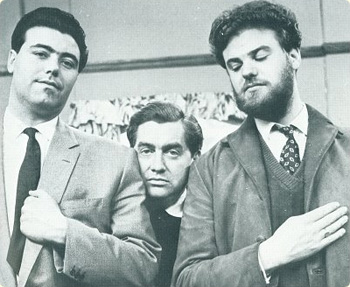
Also in the studio, Tony Hancock and company reciting Galton and Simpson’s classic sketch, ‘The Poetry Society’, which has meant almost as much to me as those magnificent albums. Well, it’s made me laugh more, at least.
Whilst Ornette had created a new chapter in the avant-garde of jazz culture, East Cheam’s would-be revolutionary was, as usual, making little headway in his quest for self-improvement.
I was tempted to just post the whole show, but you can read it here and buy it here (for just 95p as I write).
For my money this is Hancock’s finest half hour, where classic jokes abound as our Tony desperately tries to ingratiate himself with the ‘East Cheam Cultural Progressive Society’.
The joke is partly on the culturally pretentious but, as always, really revolves around Hancock and his aspirations. In another sketch he can found on his bed, struggling to read Bertrand Russell between having to reach for the dictionary every few seconds. Galton and Simpson would later explore failed aspirations in the tragic-comic figure of Harold Steptoe.
I used to enjoy dropping this part of the show into my DJ sets sometimes:

Hancock: We’re the ‘avant-guard’ of the New Culture. We’re dedicated to setting up a new order of things; determined to establish a new set of values; to break away from the bonds that threaten to stifle the cultural and creative activities of Man’s mind.

Sid: Blimey, another load of layabouts.

Hancock: We are not layabouts, we are artists, mush. Writers, poets, thinkers, all men who are seriously perturbed about the state of the world at the moment.

Sid: And what are you lot going to do about it?

Hancock: We are going to show the world the real truth, by setting them an example, developing our superior intellects. Culture, mate, that’s where the hope of the world lies. And a more cultural mob than us you wouldn’t find outside the Chelsea Embankment. Twenty-seven throbbing intellects, raring to go.

Down the years I’ve been able to relate to this show, as a dedicated, dole-dwelling anti-establishment poet – ha! But you have to be able to laugh at yourself, if only retrospectively.
Half a century has not blunted the sharp, cynical wit on display here. Regarding the subject matter of phoney cultural rebellion, it will probably never be out of date.
Related Posts Plugin for WordPress, Blogger...