It's the silly season...so.......let's Carry On Blogging.....shall we? Would that make a decent addition the Carry On series?
"Ooooh, what a long post!"
"He's Googled 'imself again!"
"I thought he was walking a bit funny!"
etc
Maybe not............
Soon be Christmas...the Quality Street tin's virtually empty already...only the toxic strawberry ones left...it's a true mark of the proletariat to have a box of QS and not some posh selection from Hotel Chocolat or Waitrose, innit? The Hotel Chocolat selection is unopened...saving it for...I dunno what. The fact that both are in the flat prove that I'm still in touch with my roots yet have also broken free of their restraints and aspired to something more refined, don't you think? The sociological significance of chocolates...
Here's some music. The clip features Burt Bacharach, who wrote it, tinkling the organ. It's not a cheery Christmas tune but...you know...it is brilliant...
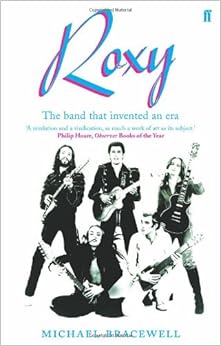
If you still need to buy a Christmas present for the one you love (bit late, isn't it?) I recommend Roxy - The Band That Invented An Era by Michael Bracewell, which I only recently started reading. Damned good if you're interested in the roots of the Pop Art scene in the UK, the Richard Hamilton / Bryan Ferry connection and all that. Bracewell's a smart cookie and writes well.
See how I top 'n' tailed this post with Pop Art? Yes, that's a Paolozzi sculpture some idiot's standing in front of in the top picture. Sorry, perhaps you recognised it. I don't mean to patronise....honest...it's just that you never know who knows what, do you? Thanks for reading Include Me Out. I like to imagine that I'm not always talking to myself. Over Christmas I shall carry on blogging...because...
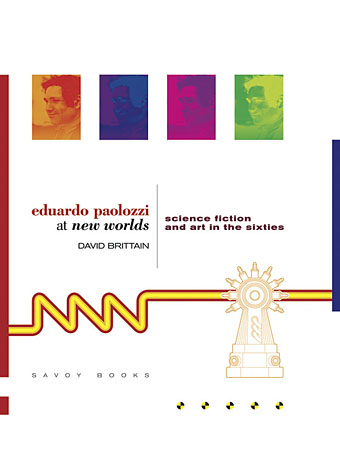
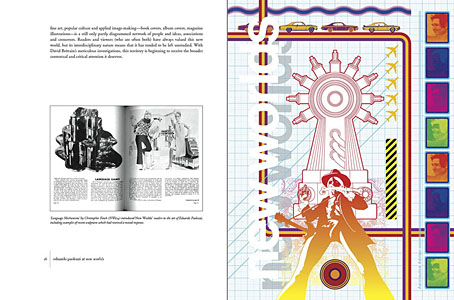
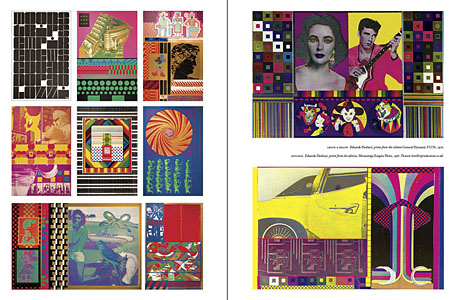
Published by Lund Humphries in 2003, Editions Alecto - original graphics, multiple originals 1960-1981 catalogues the Art print company's admirable record of working with the likes of Eduardo Paolozzi, Colin Self, David Hockney and other stars of the 60s. Most of us can't afford the original works so we have to make do with this book. I was lucky to pick one up in a Charing Cross Rd bookshop basement. There are a few for sale here(USA) at a reasonable price. Worth the money. More about the company here.
1968
Electric Chair, Colin Self & Christopher Logue, 1968
Unlike us, Pop Art is eternally youthful. Whilst lounging on a bean bag at the Barbican's Pop Art Design exhibition yesterday I asked LJ how old you had to be before you wouldn't contemplate doing such a thing. 50? 60? 70? After all, there's a time when getting off the bags would be damned hard if not impossible. As it was, I considered asking someone to help me up.
We were in a small room showing short films and adverts. William Klein's Broadway By Light came on. I'd never seen it, and spent the whole ten minutes with my eyes wide open, jaw dropped, agog in amazement.
I was struck by Jann Haworth's Cowboy; its grotesque softness, nightmarish Westworld qualities and the Frankenstein-like patchwork stitching behind one ear.
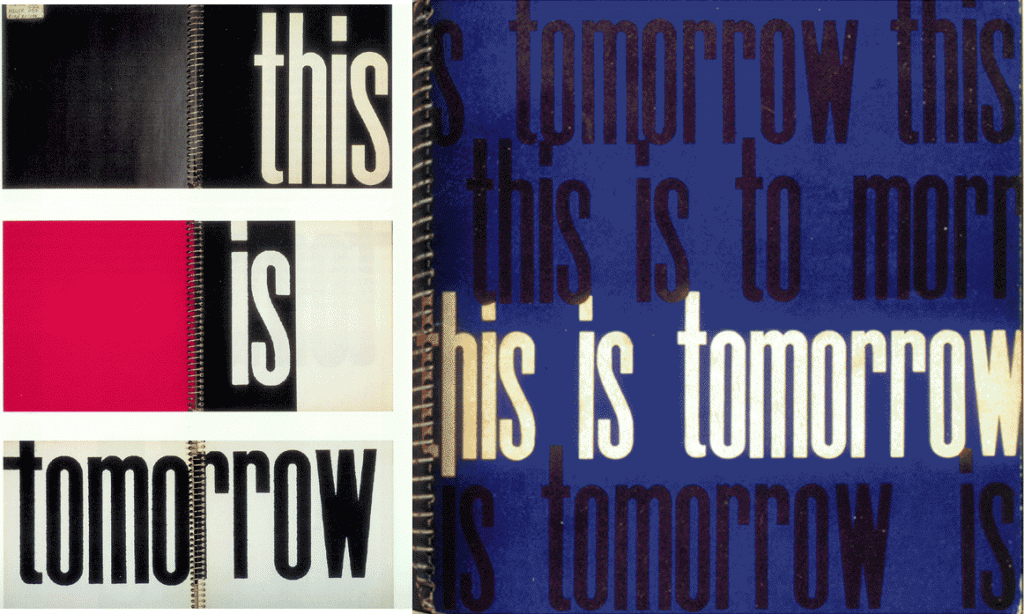
Of all the things exhibited what I craved most was the This Is Tomorrow catalogue in a case. As I joked with LJ, I'd take that if given the choice of anything, despite its relatively low monetary value (it still sells for around £1000). I imagined organising a crack team of burglars with me shimmying down a rope like, er, Tom Cruise in Mission Impossible, evading all security features to cut the plastic with a laser bean and bag this book.
As he did for Ambit magazine from '67 to '80, Paolozzijuxtaposes images with plundered texts, frequently resisting the temptation to create obvious connections. Disconnection, more like.
'His life included an early and abiding interest in radio and communications, RAF service in WW2, the establishing of his home electronic studio in the 1950s, and continued writing about radio, tape recording and electronics throughout his career.
His contribution to the sci-fi puppet series Space Patrol, which first aired in 1963, is the first on British TV to feature a complete electronic score for each episode. His music and sound effects are integral to the atmosphere, and were created with tape manipulation and electronic tone generators.'
On Interpretations On F.C. Judd Fred gets 'Wrecked' by Ekoplekz and sampled (speech), naturally, because the sound of an Englishman from the olde days of v-neck sweaters and pipes discussing electronic music is irresistibly both quaint, amusing and incongruous, isn't it?
'By the start of 1963 Fred had designed and built his own prototype synthesizer – a simple voltage controlled, keyboard-operated unit for generating, shaping and switching electronic sounds – a small but significant development in the history of the synthesizer, as it pre-dates the Synket, Moog and Buchla instruments.'
He wasn't German, American, Dutch or French, and didn't belong to a state-sponsored futurist music lab. Like Daphne, he ploughed a lonesome furrow fuelled by an obsession with the potential for new music in the popular mechanics mode of DIY space-age sound. The golden age of tape technology as techno hobbyist heaven provided work for some in writing (Judd wrote several books) and the BBC's Radiophonic Workshop, of course - all before The Future became redundant and little more than glorious nostalgia.
Ian Helliwell's devotion to ensuring that Judd is not forgotten earns him the right to remake the man's music and he does so here in fine style, providing a lovely sample of Fred directing his wife (?) on where to stand for a recording - she's out in the kitchen when Fred directs her into the living room, instructing her to talk, to which she responds 'Yeah, all right, I'm standin' 'ere talkin' to meself' - classic - the sound of tomorrow rewritten as a sitcom.
Leyland Kirby's contribution is as good as you'd expect, an electrical storm of reverb, and Mordant Music typically loops the loop until it almost disintegrates, conjuring a kind of demonic Dr Who scenario from the tomb of time. Perc and Peter Rehberg both do justice to the source, the latter evoking behind-the-sofa soundtracks to 60s sci-fi that spooked my generation. Everyone involved does a great job. It's a wonderful compilation, where past and present intermingle, as befits music from time gone by that spoke of what was to come.
Countless unknown pleasures await us - if we could count them, it would be weird, and contradictory, yes? How many artists, writers, musicians await our discovery? It's like looking up at the night sky and trying to imagine all the stars...
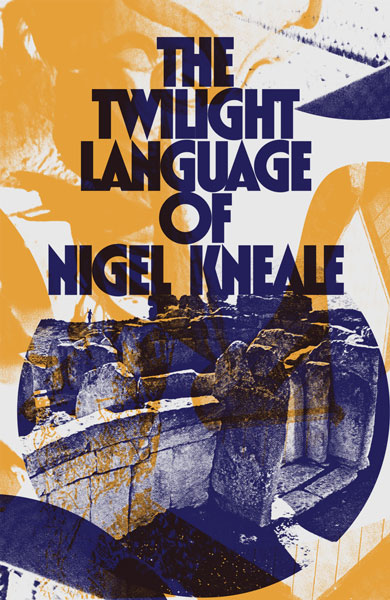
Nigel Kneale was unknown to me until a friend on Facebook posted notice of this from the publisher's (Strange Attractor) site. I had heard of the legendary Quatermassseriesbut never seen it. Being a child of the first Dr Who series, this pioneering sci-fi programme somehow seemed beyond me, simply by happening before me. This is odd because so much cinema and music I love also happened before me.
The only other Quatermass I knew was Tod Dockstader's seminal work of the same name from 1964. Dockstader was oblivious to the series when he used the title having seen it on the spine of a book in a library, apparently. He's found out since, of course. It's an apt imaginary soundtrack to the series.
A more direct musical link comes from Drew Mulholland, who's music as Mount Vernon Arts Labhas been inspired, in part, by his obsession with Quatermass, whichhe writes about in this book. He confesses that it got so bad he 'had to reign it in'. Other highlights are Paolo Javier's 'Kneale Before Zod', a compendium of quotes and coincidences relating to Kneale (he was born on the same day as Charles Mingus), and the ever-dependable Ken Hollings' 'Spaceship UK: The British Space Programme as Musical Exploration'. There's also a good interview with China Miéville.
I must mention Rob Carmichael's design, which is outstanding.
Because I was quick off the mark I got the cassette that comes with early copies, along with the poster advertising a New York event in honour of Nigel Kneale, which strikes me as odd, but we know that cult status breaks all national barriers, so why not? There's some good music, most of it in the retro 60s sci-fi instrumental mode you would expect, except for Mordant Music's10-minute contribution, which is a pea-souper of a mix so thick yet ethereal that it's quite possible to get lost inside.
All-in-all a fine job's been done by editor Sukhdev Sandhu. Only 250 printed, though, so hurry if you're interested.
...but no, here's Howard, tinkling his keyboard in a tutorial fashion, showing us chords, diminished flats, cells and other things I've since forgotten...
...telling us all about the Story Of Music, no less - I eagerly anticipate his description of the musique concrete revolution and Stockhausen's electronic kick, assuming he'll include them. What will he say about Hip-Hop? Will he demonstrate the use of the Apache break on twin decks, or simply play a sample on that keyboard of his (does it have a 'breakbeat' setting?) - can't wait.
Meanwhile; Difficult Music. Atonality, no less. The sound the fury of Anton Webern, Arnold Schoenberg and Edgard Varèse upsetting the establishment by playing new things on old instruments - that is the shocking aspect. It's kind of Classical, but not as we know it. Had synthesizers been available in 1910 they may have written for them, and nobody would have cared because avant-garde electronic music isn't taken seriously. Not on TV, anyway - therefore, not anywhere - because to be on TV validates everything, from cooking to cats that can skateboard....
...skateboarding ducks became a symbolic joke on British TV back when everything was orange (or to be more precise, nicotine-coloured) and workers went on strike. Yes, that long ago. How could those who sniggered at animal antics being broadcast predict that three decades later the whole world would be addicted to animal antics via a thing called YouTube on computers (!) that weren't the size of a bungalow, but could be held in the palm of your hand?!
How could I have predicted, when starting my career as a DJ, that two decades later a Varese LP would always be in my record box (ask your dad) for one residency. The place was called Bartok, and therein lies a clue to the theme it promoted (but only if you know anything about the history of Classical music). Yes, Varèse would get a regular airing, although when they hired me perhaps they expected more Mozart. But it was a thrill to play Ionisation - call me crazy...
Why bother watching these programmes when there's so much Easy Viewing to tempt us? Wall-to-wall cooking, dining and cosy comedy beckons. I spoke to someone about this recently who suggested that many with demanding jobs (intellectually, presumably) wanted Easy TV. Oh the irony, since aren't those the very people this kind of programming is aimed at? And what is everyone else's excuse? They need a break from existence, to hit the mental snooze button. What else is High Definition TV for if not Lowbrow Culture? We have very Smart TVs for so many Stupid programmes.
'Why is the world full of so much shit?' LJ asked me not so long ago, meaning excrement of the cultural kind - and, staring out the window of the bus, I came up with the theory that the sheer volume of tripe on the telly acts as fertilizer for the forest of foolish nonsense today - music, film, whatever. The more there is the more they make and the outlets bloom like so many poisonous fungi, which people consume, and their brains die. - you see? Whereas when there were fewer channels the simpletons were more likely to come across something good and possibly think 'That's quite good, actually, despite the subtitles etc', and the world (UK, at least), would be a better place, filled with more creative energy dedicated to Art, Music, Film because people had been inspired by something they saw on TV. But was it better back then, in, say the 70s? Wasn't there as much crap as there is now? Percentage-wise...who has the figures,and who decides what it Crap? I don't know. The theory may be nonsense, but it passed the time. And anyway, Barry Norman's film programme (ask your granddad) was sure to feature many undisputed classics in the 70s. Today, there isn't even a good film programme on terrestrial TV - and if there was, it would be filled with formulaic garbage, mostly.
Radical music gets no time on TV. Not even on The Culture Show, which regards New Folk (?) and token black singers as the be-all and end-all of contemporary music. Yet it ventures across all terrain in the Arts. Is music not considered a valid art form in the UK today? Is Ekoplekz twiddling his knobs in vain? Demdike Stare? Café Kaput?Mordant Music? Perhaps I missed programmes featuring them...
...so I rejoice in the current 'glut' of programmes about music on TV. Yes. They may be historical by nature, but what The Sound and the Fury does cover makes a change from the usual BBC policy of providing TV for Mojo-readers...