Showing posts with label Mordant Music. Show all posts

Saturday, 1 April 2017

The Classics, Old-Time Jazz Religion and New Victuals


I only listen to old stuff

Currently, on this morning of April 1st, Andres Lewin-Richter's Space Electronics album for CAM...


...it's sublimely austere electronic sounds still resonate as prime examples of how less can be more; the joy of electro-primitivism.

I don't only listen to old stuff, as regular visitors will know, but the Old Stuff question came to mind as I cycled home from Work the other day, contemplating Jazz, specifically. It's not unusual for me to contemplate Jazz but it was a subject of speculation principally because of jokes exchanged on Facebook with a friend who can't stand it....

...I'm not here today to defend Jazz. For my thoughts on the genre from the post-WW2 to mid-70s period, there's my book. Yes, currently at a ridiculous price, I know, but it does crop up for much less than that now and again.

Gimme That Old-Time Religion

The Art Ensemble of Chicago playfully referenced religion and the 'old-time' tradition on their 1969 album, Message To Our Folks...


...I confess that Jazz was a religion once upon a time in my life. I enjoyed seeing new 'live' bands, but even after the learning stage (which lasted a good three or four years, being pre-internet days when research took longer) that old-time religious Jazz canon was always what excited me the most. 

I cannot say that it's impossible to compete with the 'classics' of any art form. I may have said that once upon a time. I may have said a lot of stupid things. Haven't you? The arts are not a competition, despite the pressures to make them just that as applied by the capitalist marketplace model of consumerism and 'success'. Within the wide parameters of any creative mode the most an artist can hope to do is make her/his own version which contains enough of themselves, their vision, to add distinction to a piece.

Apologies for stating the obvious. We need to remind ourselves of these things sometimes.


Talking of old/new dreams, contemporary and classic forms, from an example of great library music via Space Electronics, let's move to Leyden Jars' Victuals album for Mordant Music. My initial response was lukewarm, but now I feel a glow of satisfaction with each listen. What makes something work? We may ponder this, even when the answers are obvious. In some cases, a radical new approach, in others, the application of skill or natural talent. Victuals is all understatement in the manner of H****ology, with few of the cliches. Natalie Williams and Mark Courtney are smart enough to have created an interesting sonic climate throughout, one of muted patterns and engaging detail. As happens these days, the idea of nostalgia for past dance areas is alluded to on Where The Dancehall Used To Be, except in that title there could be other references; dancehalls of old in the mode of The Caretaker? Dancehalls in villages where local discos were held? Either way, Leyden Jars blend the hushed electric tones with enough subtle sub-bass to form a brilliantly suggestive echo-chamber of whatever memory you choose. There's much that's of interest on Victuals, not least the inclusion of a baritone saxophone on Sawn Off, played naively, as if tentatively practising a simple riff, yet it's totally effective in adding an extra dimension.

Monday, 16 February 2015

Baron Mordant, Nick Edwards & Shackleton - Pioneers 04 (Cavendish Music)


Since the bloody doors got blown off the library music...um, library, helped by the BBC Radiophonic/Ghost Box axis/revival/renewal thing, avant garde-ian 'readers' have heard some treats - like Bruno Nicolai and Ennio Moriccone's Dimensioni Sonore series for RCA and works by Egisto Macchi. So many other oddities got dusted off and shared on the grabvine too.

Some of my favourite musical things are 'library' records, partly because the tracks are never too long, through necessity, this is utilitarian mood music made for usage therefore not prone to abusage (?!). No time wasted wandering towards the 20min mark with vague aspirations to be 'epic'. Unshackled from the pressures of recording a 'proper' album, maestros of mood make every second count.

So here, working for long time providers of library music, Cavendish, are modernists Baron Mordant, Nicholas Mayo Edwards (Ekoplekz) and Reiner Zufall (Shackleton). They do a good job too - Drone Master by Zufall, Zombie March by Baron Mordant and Cue Twelve by Edwards, for instance. By slipping Ecological and Biological into two titles, Zufall smartly nods towards a tradition in library records of albums based around both. On Cue Eleven, Edwards springs a perfect tribute to all things Radiophonic and all bleepy weirdness shelved under 'Science' in the collective library. I'll say no more because you can hear the whole thing on YouTube.


Thursday, 9 October 2014

eMMplekz - You Might Also Like C40 spool (Mordant Music)


Soho spivs, Saville row, selling cravats to Dieter Meier, puffing Cubans...

........."average gifts amplified can be misleading"..."another prick in the mall"..."circling the cake stands like neutered Zulus"..."stag do, stag don't"..."I've got the face of a has-been catalogue kid"..."I woke up and went to sleep"..."Beyond all this meeting for a coffee to chat about 'Did you see my updated status?'"..."I can't stand the rain...on my copy of Windowpane"...

Droll poetic verbal spillage from the mind of Baron Mordant backed by Ekoplekz, again, as twisted, truthful and tormented as always...cut prose, puns and wordplay portraying fictitious (?) biographical scenarios balanced on the edge of insanity...quite brilliant...


Saturday, 19 July 2014

Music Round-Up: The Group, Dieter Moebius & Some Truths


The Group - The Feed-Back (Schema)


Reissued on vinyl with free CD by Schema, for those who haven't already got it from file-sharing blogs, or music-lovers wanting a cleaner, more 'authentic' experience and wish to support the boutique limited edition (500) industry. It's as good a cause as any to support. It won't save a rainforest or endangered species, just one element of cultural history which currently teeters on the brink of extinction or, if other reports are to be believed, is undergoing a revival, like a rare animal that's been cloned, in this case. Ennio and the gang play Free-psyche-beat-Improv...because they were crazy men, spirited men, making music...


***

Dieter Moebius - Nidemonex EP (More Than Human)

More than good, it's very good. 'Hey, Dieter sounds good...for his age' (back-handed compliment) - he is 70, after all and should have retired, in silence, to only contemplate his glorious past, namely as co-founder of the legendary K(C)luster, instead of continuing to make music. And this, this easily competes with anything made by whippersnappers today...because behind these transmissions from the machine mind of Moebius are all those years of experience in creating interplanetary sound vibrations. Listen to Zytos and tell me it isn't so. Even the potentially comic 'ghost voice' on Zytos is not funny because it floats in, or is drowned by, the sonic terror of Hellraising dread. Wonderful.


***

Some Truths - Some Friends I Lost To Bedlam, Others I Abandoned There (Mordant Music)


Planet-rocking Electro Acid Jazz trombonist Ralph Cumbers calling occupants of interplanetary, most extraordinary craft (inc Spaceship Earth) on another ravishing exercise in how to ingest influences but regurgitate them as something tasty rather than the contents of a bird's stomach, which wouldn't be tasty to us, but is to chicks, obviously. If you're not a slave to his rhythms as Bass Clef, you should be. Meanwhile, this is another magnificent Mordant Music release for modern star people.

Wednesday, 20 November 2013

Reaching Infinite Compilation


'Ello, mate. 
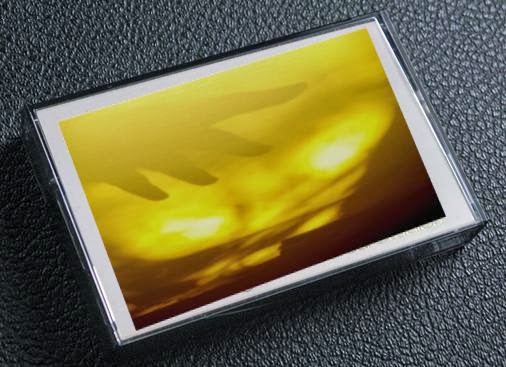
Look, I've made you a tape. Library stuff, mostly, with a few modern acts on it...you know, the usual suspects, but they fit.
Remember that girl I used to see down in on the coast in Hove? That was back when everyone still had tapes. That's all she had, tapes, strewn all over the floor of her flat where we sat smoking, wondering whether to shag or not, well I was anyway. Turns out we didn't. All I remember her playing was Rickie Lee Jones...that was all right with me. Chuck E's In Love...I wasn't, but I liked her well enough. 
I met her at a fanzine convention. She bought something I made and we got chatting, you know. Next thing I'm living in Brighton with a mate in a run down B&B for bums on the dole. That was us. I wouldn't say it was bad but the milk they supplied for breakfast was off one morning...yeah...
I got a job, finally, in the restaurant on the end of the pier...serving tea to old folk whilst some bloke played the organ...christ, makes me feel ancient... 
The bomb had just gone off at the Tory conference, so that makes it...'84. I'll never forget a couple of Yanks coming up to me whilst I was clearing the tables and asking where the bombing happened. I pointed across the see to a bloody great big black hole in the buildings and said 'There'. 
Live Aid was on...posters in all the windows and the sound of it coming out of them as I walked the streets wondering what the hell I was doing with my life and how much longer I could stand that job & Bob Geldof & Queen & Status fucking Quo... 
Anyway, I made you a tape. Things have changed. No need for cassette-players...just download it...hope you like it...
Oh, the photo on the cover is by LJ.


Wednesday, 6 November 2013

Mike Ratledge - Riddles Of The Sphinx (Mordant Music)


Laura Mulvey and Peter Wollen's 1977 film, to which this is the soundtrack, explores 'issues of female representation, the place of motherhood within society and the relationship between mother and daughter' according to the BFI site. It is, in the words of the film institute, 'intellectually rigorous', therefore a challenge to someone like me...

...however, if my mother had been a high-flying career woman and my father equally ambitious I might be different. Perhaps I coulda had class. I coulda been a contender. I coulda been somebody, instead of a dumb prole, which is what I am, let's face it. Still, I hold no grudges. My mum was a housewife who read Catherine Cookson and the only time I recall her going to the cinema was when she took me to see Bambi, which left me emotionally scarred for years. However, as proof of culturally upward mobility in our family, I've watched about 20 minutes of Riddles Of The Sphinx, which is further than my mum, dad, brothers or sisters would get.

According to Greek mythology, the female (male versions also exist) sphinx asks a question and kills those who cannot answer the riddle. Finally, Oedipus solves it and the sphinx destroys herself. From a feminist perspective, does the riddle asked by the sphinx becomes the riddle that is all women in a patriarchal society? Women as guardians of tombs and temples, the home serving as both? Viewed from a suspicious male perspective, is woman the would-be destroyer of those who fail to understand her?

The word sphinx comes from the Greek Σφίγξ, from the verb σφίγγω (sphíngō), meaning "to squeeze", "to tighten up". Hence, sphincter. I'm in danger of talking through mine if I venture to interpret the film and it's possible feminist theories, so I won't. Suffice to say that the narratives we impose on history and myth are what we wish them to be, to paraphrase the Gertrude Stein quote at the start of the film.

Egyptian mythology in my listening history includes the cosmo-pyramid artwork on Earth Wind & Fire's 1977 album, All 'N'All. It's a riddle how they went from Funk/Soul superstars with some credibility to appearing on Strictly Come Dancing last week. Mind you, the signs were there when they went global and overly showbiz with their Vegas-style shows in which Maurice White would fly around suspended from wires, which Strictly is also prone to having its dancers do, so perhaps Maurice has watched a few episodes and thought 'We must play that gig!'.

Parliament also put on extravagant shows in the 70s, of course, although theirs were less choreographed, more anarchic, and far more funky. It was from their album, The Clones Of Dr. Funkenstein, that I learnt how the concept of specially-designed Afronauts, capable of funkatizing galaxies, was first laid on man-child
but was later repossessed and placed among the secrets of the pyramids.

I've yet to work out the secrets of this record, or more to the point, fully understand the socio-political/feminist theories, but then, as a listening experience it's even more abstract than the film. Yet the texts in this format are frequently poetic, along with scenes from domestic life. In a way it reminds me of Delia Derbyshire & Barry Bermange's Inventions for Radio. The music at times is akin to Terry Riley's In C.

All in all, a very interesting album.


Thursday, 31 October 2013

eMMplekz - 'Your Crate Has Changed' (Mordant Music)


Baron Mordant as blank verse bard - 'in for the long haul, butter ohm my back...'. Kerouac had Zoot Sims, Ian Hicks has Nick 'Ekoplekz' Edwards for a bout of interStella underdrive anti-poetry.

'I'm hassled and tired...close to the wire...bad acid crawls thru me...slowly reduce me...'.

Spontaneous, or previously scrawled on napkins & notebooks, what does it matter? The Baron prefers to be elusive (he's withdrawn from Facebook!).

Except that Queer Vibe does tell a tale, of sorts, about sordid accommodation - 'just the sight of the room made our skin crawl'.

MMorose...

Sounds like it was made in a 'pale ale haze', Edwards' radiophonics enhancing the drugged deadpan atmosphere and occasionally anchoring the words to regular rhythms. But mostly, it's an inner space broadcast from from a man trapped in a tin can, his own mind.

There are no 'well-intentioned, badly realised, poorly executed synth pads' on this record...

VG plus.

Saturday, 12 October 2013

Coming Soon: eMMplekz - Your Crate Is Empty


I don't normally pre-hype albums but Baron Mordant & Ekoplekz as eMMplekz have made one worth plugging. The Baron's blank verse backed by Nick Edwards' radiophonics is a fascinating audio experience. 

'It's really sad when women go bald.'

'eMMplekz return server after 'IZOD Days' semi-beguiled local sorting offices…'Your Crate Has Changed' takes up that diarised baton & legs it to Rymans for future remnants…take a dose of plagued Pepys, a demijohn of Ekoplekz's masterly live voltage and siMMer…switch to classic...BM/EZ'

Tracklist:

The Quarry
Raining With Piss
AsspuMMel (Must Try Ader)
Tethered To My Hotspot
Abacabacus
Alby's Riddim
Sorry For Your Lossy
Queer Vibe
Your Crate Has Changed
Invoices In My Head
The Arc of Trapeze
Ireman
End Of
GaMMy GuMMy

Release date: 4th Nov 2013


Friday, 12 July 2013

Sunday, 2 June 2013

Thanet - Receiving Calls (Mordant Music)


As the second anniversary of this classic album approaches I feel it my duty to remind you of it's existence. Receiving Calls by Thanet deserves to be recognised as one of the best things released over the last five years, at least...maybe 10 (or 20, what does it matter?).

And why not celebrate a 2nd anniversary? It seems absurd, perhaps, when traditionally at least five should pass before a recording merits the anniversary status. Or in Dubstep, five months, but that's another matter. As befits the modern world, time is shrinking, especially in relation to music. Was it last week that you downloaded the complete Merzbow for nothing, or last year? When was that album by Luc Ferarri (which you also downloaded for free) released anyway? '67? '61? '51? Eh? No time to even register the title in the digital gold rush.

Never mind celebrating two years, how about two minutes? Hold on, is that possible? I suppose so, if you wrote a review at 12.02 on the day of a release. But that would be silly.

Surfing for words about Receiving Calls I didn't find many, which struck me as criminal (well, tragic, at least). Why wasn't this set hailed and written about by everyone interested in modern electronic music? Why, also, wasn't it one of my Albums of the Year for 2011? Did I create a list for that year? Can I find one? Am I real, or just a detached digital voice?

The reason I haven't mentioned this album before is because although I recall seeing the sleeve two years ago I didn't give it a listen, or listen properly. Just yesterday, however, 'By Day And By Night' cropped up on a comp, so I investigated, time-travelled, if you like, all the way back to 2011, where I found this 21-track epic of absolute splendour. Mordant Music, of course, although I'm not sure if this is The Baron's work, or someone else.

Two tracks deserve a special mention; 'Submit I.Q.' for its sustained mood of twilight on the beach just after The Bomb, and '1932 Nightmare', where a single bass note becomes swamped by reverse-tape old-time radio orchestration (The Caretaker made nightmarish) evolving into 'The Sun Has Got His Hat On' (which was recorded twice in 1932) before another, electronic passage.

There's enough radiophonic-ethereal-electronic-waveform wonderment on the beach of washed-up transistorised transmissions here to last you a very long time...as you wander the digital shoreline...your feet lapped by all manner of sonic goodness. If, like me, you missed it first time 'round do investigate.


Friday, 3 May 2013

Interpretations On F.C. Judd - Various Artists (Public Information)


'His life included an early and abiding interest in radio and communications, RAF service in WW2, the establishing of his home electronic studio in the 1950s, and continued writing about radio, tape recording and electronics throughout his career.
His contribution to the sci-fi puppet series Space Patrol, which first aired in 1963, is the first on British TV to feature a complete electronic score for each episode. His music and sound effects are integral to the atmosphere, and were created with tape manipulation and electronic tone generators.'

This is a Public Information broadcast.

On Interpretations On F.C. Judd Fred gets 'Wrecked' by Ekoplekz and sampled (speech), naturally, because the sound of an Englishman from the olde days of v-neck sweaters and pipes discussing electronic music is irresistibly both quaint, amusing and incongruous, isn't it?

'By the start of 1963 Fred had designed and built his own prototype synthesizer – a simple voltage controlled, keyboard-operated unit for generating, shaping and switching electronic sounds – a small but significant development in the history of the synthesizer, as it pre-dates the Synket, Moog and Buchla instruments.'

He wasn't German, American, Dutch or French, and didn't belong to a state-sponsored futurist music lab. Like Daphne, he ploughed a lonesome furrow fuelled by an obsession with the potential for new music in the popular mechanics mode of DIY space-age sound. The golden age of tape technology as techno hobbyist heaven provided work for some in writing (Judd wrote several books) and the BBC's Radiophonic Workshop, of course - all before The Future became redundant and little more than glorious nostalgia.

Ian Helliwell's devotion to ensuring that Judd is not forgotten earns him the right to remake the man's music and he does so here in fine style, providing a lovely sample of Fred directing his wife (?) on where to stand for a recording - she's out in the kitchen when Fred directs her into the living room, instructing her to talk, to which she responds 'Yeah, all right, I'm standin' 'ere talkin' to meself' - classic - the sound of tomorrow rewritten as a sitcom.

Leyland Kirby's contribution is as good as you'd expect, an electrical storm of reverb, and Mordant Music typically loops the loop until it almost disintegrates, conjuring a kind of demonic Dr Who scenario from the tomb of time. Perc and Peter Rehberg both do justice to the source, the latter evoking behind-the-sofa soundtracks to 60s sci-fi that spooked my generation. Everyone involved does a great job.  It's a wonderful compilation, where past and present intermingle, as befits music from time gone by that spoke of what was to come.

Released on May 20th


Tuesday, 12 March 2013

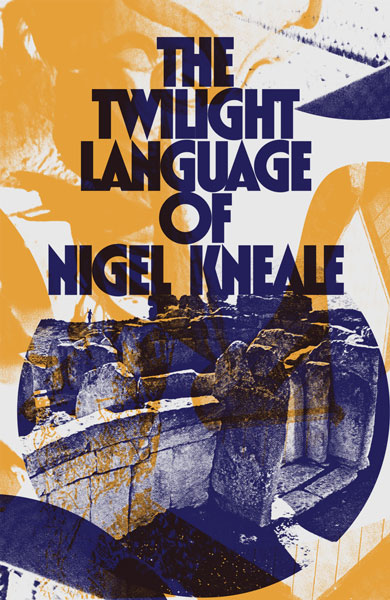
The Twilight Language of Nigel Kneale (Strange Attractor)


Countless unknown pleasures await us - if we could count them, it would be weird, and contradictory, yes? How many artists, writers, musicians await our discovery? It's like looking up at the night sky and trying to imagine all the stars...

Nigel Kneale was unknown to me until a friend on Facebook posted notice of this from the publisher's (Strange Attractor) site. I had heard of the legendary Quatermass series but never seen it. Being a child of  the first Dr Who series, this pioneering sci-fi programme somehow seemed beyond me, simply by happening before me. This is odd because so much cinema and music I love also happened before me.

The only other Quatermass I knew was Tod Dockstader's seminal work of the same name from 1964. Dockstader was oblivious to the series when he used the title having seen it on the spine of a book in a library, apparently. He's found out since, of course. It's an apt imaginary soundtrack to the series.

A more direct musical link comes from Drew Mulholland, who's music as Mount Vernon Arts Lab has been inspired, in part, by his obsession with Quatermass, which he writes about in this book. He confesses that it got so bad he 'had to reign it in'. Other highlights are Paolo Javier's 'Kneale Before Zod', a compendium of quotes and coincidences relating to Kneale (he was born on the same day as Charles Mingus), and the ever-dependable Ken Hollings' 'Spaceship UK: The British Space Programme as Musical Exploration'. There's also a good interview with China Miéville.

I must mention Rob Carmichael's design, which is outstanding.

Because I was quick off the mark I got the cassette that comes with early copies, along with the poster advertising a New York event in honour of Nigel Kneale, which strikes me as odd, but we know that cult status breaks all national barriers, so why not? There's some good music, most of it in the retro 60s sci-fi instrumental mode you would expect, except for Mordant Music's 10-minute contribution, which is a pea-souper of a mix so thick yet ethereal that it's quite possible to get lost inside.

All-in-all a fine job's been done by editor Sukhdev Sandhu. Only 250 printed, though, so hurry if you're interested.


Also written by Kneale...


Monday, 18 February 2013

Uneasy Listening On TV


BBC TV brainiac music attack: The Sound and the Fury: A Century of Music and Howard Goodall's Story Of Music - ooh what an illicit thrill...when we could be watching Come Dine With Me, Skyfall on DVD, or even Sky Sports....

...but no, here's Howard, tinkling his keyboard in a tutorial fashion, showing us chords, diminished flats, cells and other things I've since forgotten...

...telling us all about the Story Of Music, no less - I eagerly anticipate his description of the musique concrete revolution and Stockhausen's electronic kick, assuming he'll include them. What will he say about Hip-Hop? Will he demonstrate the use of the Apache break on twin decks, or simply play a sample on that keyboard of his (does it have a 'breakbeat' setting?) - can't wait.

Meanwhile; Difficult Music. Atonality, no less. The sound the fury of Anton Webern, Arnold Schoenberg and Edgard Varèse upsetting the establishment by playing new things on old instruments - that is the shocking aspect. It's kind of Classical, but not as we know it. Had synthesizers been available in 1910 they may have written for them, and nobody would have cared because avant-garde electronic music isn't taken seriously. Not on TV, anyway - therefore, not anywhere - because to be on TV validates everything, from cooking to cats that can skateboard....

...skateboarding ducks became a symbolic joke on British TV back when everything was orange (or to be more precise, nicotine-coloured) and workers went on strike. Yes, that long ago. How could those who sniggered at animal antics being broadcast predict that three decades later the whole world would be addicted to animal antics via a thing called YouTube on computers (!) that weren't the size of a bungalow, but could be held in the palm of your hand?!

How could I have predicted, when starting my career as a DJ, that two decades later a Varese LP would always be in my record box (ask your dad) for one residency. The place was called Bartok, and therein lies a clue to the theme it promoted (but only if you know anything about the history of Classical music). Yes, Varèse would get a regular airing, although when they hired me perhaps they expected more Mozart. But it was a thrill to play Ionisation - call me crazy...


Why bother watching these programmes when there's so much Easy Viewing to tempt us? Wall-to-wall cooking, dining and cosy comedy beckons. I spoke to someone about this recently who suggested that many with demanding jobs (intellectually, presumably) wanted Easy TV. Oh the irony, since aren't those the very people this kind of programming is aimed at? And what is everyone else's excuse? They need a break from existence, to hit the mental snooze button. What else is High Definition TV for if not Lowbrow Culture? We have very Smart TVs for so many Stupid programmes.

'Why is the world full of so much shit?' LJ asked me not so long ago, meaning excrement of the cultural kind - and, staring out the window of the bus, I came up with the theory that the sheer volume of tripe on the telly acts as fertilizer for the forest of foolish nonsense today - music, film, whatever. The more there is the more they make and the outlets bloom like so many poisonous fungi, which people consume, and their brains die. - you see? Whereas when there were fewer channels the simpletons were more likely to come across something good and possibly think 'That's quite good, actually, despite the subtitles etc', and the world (UK, at least), would be a better place, filled with more creative energy dedicated to Art, Music, Film because people had been inspired by something they saw on TV. But was it better back then, in, say the 70s? Wasn't there as much crap as there is now? Percentage-wise...who has the figures,and who decides what it Crap? I don't know. The theory may be nonsense, but it passed the time. And anyway, Barry Norman's film programme (ask your granddad) was sure to feature many undisputed classics in the 70s. Today, there isn't even a good film programme on terrestrial TV - and if there was, it would be filled with formulaic garbage, mostly.

Radical music gets no time on TV. Not even on The Culture Show, which regards New Folk (?) and token black singers as the be-all and end-all of contemporary music. Yet it ventures across all terrain in the Arts. Is music not considered a valid art form in the UK today? Is Ekoplekz twiddling his knobs in vain? Demdike Stare? Café Kaput? Mordant Music? Perhaps I missed programmes featuring them...

...so I rejoice in the current 'glut' of programmes about music on TV. Yes. They may be historical by nature, but what The Sound and the Fury does cover makes a change from the usual BBC policy of providing TV for Mojo-readers...


Related Posts Plugin for WordPress, Blogger...