Showing posts with label Jacques Demy. Show all posts

Tuesday, 1 March 2016

French film / Agnès Varda & Jacques Demy / Funky Nassau


...and that includes not blogging
WRITING UPPER CASE
having another coffee
chocolate
yeah, what are you going to do about it?
...hanging right
you can't stop me!

...the film still's from Cléo from 5 to 7 by Agnès Varda, by the way. I recommend it. Michel Legrand plays a pianist in it. That's one good thing. He also wrote the score for a film by Agnès' husband, Jacques Demy, called Bay Of Angels, which is one of the greatest films ever made & that's official, not just my opinion. I may have mentioned it before but I'm doing so again because you can't stop me and besides, you probably weren't looking then, so here's the opening sequence...


...one of my favourite openings to a film, partly because we've been to Nice (although I loved it before that) the front of which that camera zooms along in it's dizzying backward fashion. As I said to a Work colleague today, I'd move to Nice tomorrow if I suddenly had loads of money. It has the lot: climate, art, sea & scenery - do you want more from a city? I don't. London Town, as The Beginning Of The End sang in Funky Nassau, is 'too doggone cold'...and soulless...and corporate...but hey, I'm going to warm myself up with that tune right now...TTFN...


Friday, 30 January 2015

Hello, Come In, Have A Look Around...


Oh, it's you! Hello, come in, excuse the dressing gown and slippers but I was relaxing in my parlour with an opium pipe and the complete works of Thomas De Quincey. Yes, go in that room...

What? David Goodis? Yes, I haven't read it yet but had to buy it when I found it second-hand. Cut Up! is the one I'm in, three pieces. It's a great collection


Have you read Paul Morley's book? It's very good, in parts, the parts where he lists music...and talks about music writing...I like him. He should do more TV. He was always good on The Culture Show. I know, they scrapped it...no room for cultural discussion on the box, these days...


...The Liberation Of Sound is excellent, a great primer...I always pick up old books on electronic music, though you don't see many...


Ha-ha! No, I didn't put anything in your coffee, honest...


The William Burroughs word hoard...yes......I inspired someone to start reading him recently but I fear she'll make the mistake of trying to read Nova Express cover-to-cover...I always suggest dipping in, a few pages at a time, especially for beginners...otherwise they flee in terror...unable to comprehend what the hell they're looking at...best to read some sort of guide first...or at the same time...


David Thomson's good...I've got many tips from him...what I like about that is how concise he it, but it's a personal point of view...he makes interesting points without being a film buff bore...the Claude Chabrol collections are brilliant, by the way...no, you can't borrow them...


...yes, the Demy box is a treasure...that's one I'll keep for as long as I live...I should water that plant...LJ's always reminding me...'Plant killer' she calls me...she's right... 


...still, I do play them music...that's supposed to be good for them, isn't it? Or is that just hippy shit...probably...not much vinyl left now...that's the Jazz section...


...oh, OK, nice to see you. Pop 'round again sometime...hold on! No, it's all right...I just...thought my Olympia Press copy of The Ticket That Exploded was missing....no, I didn't think you'd stolen it - of course not! I just...couldn't see it for a minute and panicked...goodbye...


Tuesday, 13 May 2014

An Eastmancoulour Dream: The Umbrellas of Cherbourg


Even the properly male, iron-clad heart of this thoroughly macho writer, impervious as it is to emotional vulnerability and soppy love stories, cannot resist the seductive powers of The Umbrellas of Cherbourg. Perhaps real men watch Jacques Demy films after all.

Cannes Film Festival starts on Wednesday and 50 years ago this film won the top prize, the Palme d'Or. Those were the days...true glamour and top quality films! I say that with some reservation, not wanting to sound like a fuddy-duddy member of the nostalgista, trapped in time to the extent that nothing after 1970 was any good. You know the kind, wallowing in images of designated golden ages in music, literature and film. The chosen ages depend on that of the nostalgist involved. The 20s, 30s, 40s, 50s, 60s...perhaps even the 70s. 

The younger a person is the harder it must become to dwell on the decades that have accumulated - a whole century's-worth! It's easier to just pick the time when you were a teenager, although it's not uncommon for strange young folk to become obsessed with decades from before their birth, most commonly the 50s and 60s. They may possess iPhones and use Twitter, but yearn for and idolise times when common people didn't even have telephones. Well, as Carson McCullers said, 'We are homesick most for the places we have never known.' It's that very fact that magnifies the feeling. The grass is always greener on the other side of time. 

The colours in Demy's masterpiece are more radiant than any today. We view a world that is unreal, super real, even by Hollywood standards, yet convince ourselves that it existed, that the 60s were one long Technicolor (or to be precise in this case, Eastman colour) dream. No-one coloured the dream like Demy in the 60s, not even Godard at his Pop Artful best. See another Demy classic, The Young Girls of Rochefort, for further evidence. Danielle Licari sang Catherine Deneuve's part, perfectly pitching it as believable simplicity, yet with great elegance. Michel Legrand wrote the score. The main theme is I Will Wait For You. Like Geneviève Emery in the film, we will wait forever to see anything that comes close to matching this amazing film.


Wednesday, 2 April 2014

Your Seven A Day Cultural Diet


The recent report suggesting that eating five fruit and veg a day may not be enough and seven would be better may well be true but is ridiculously optimistic. I hereby suggest a different kind of diet; one that will nourish your eyes and ears. You may also increase your fitness levels by dancing to Serge Gainsbourg, if you wish. Or, if you prefer, simply lounge on the sofa in a smoking jacket, smoking. 

The examples below are by no means the only ingredients for a healthy lifestyle. It may be supplemented by many other artists who will do you good. Most inhabitants of the planet may be poisoning themselves with cultural junk (no Lady Gaga on these premises, please, or outside, or anywhere I can see you), but you, at least, can set a good example. 

My diet provides a healthy balance of music, film, literature and art but be warned, too much Laurel & Hardy may result in your sides splitting. Whilst there is no such thing as too much Daphne Oram, I recommend a mixture of products by the following. You may even combine some by staring at a Hannah Hoch collage whilst listening to Bernard Parmegiani - it's highly recommended! 


Daphne Oram

Serge

Mr Parmegiani

His Holiness Jacques Demy

Hitch

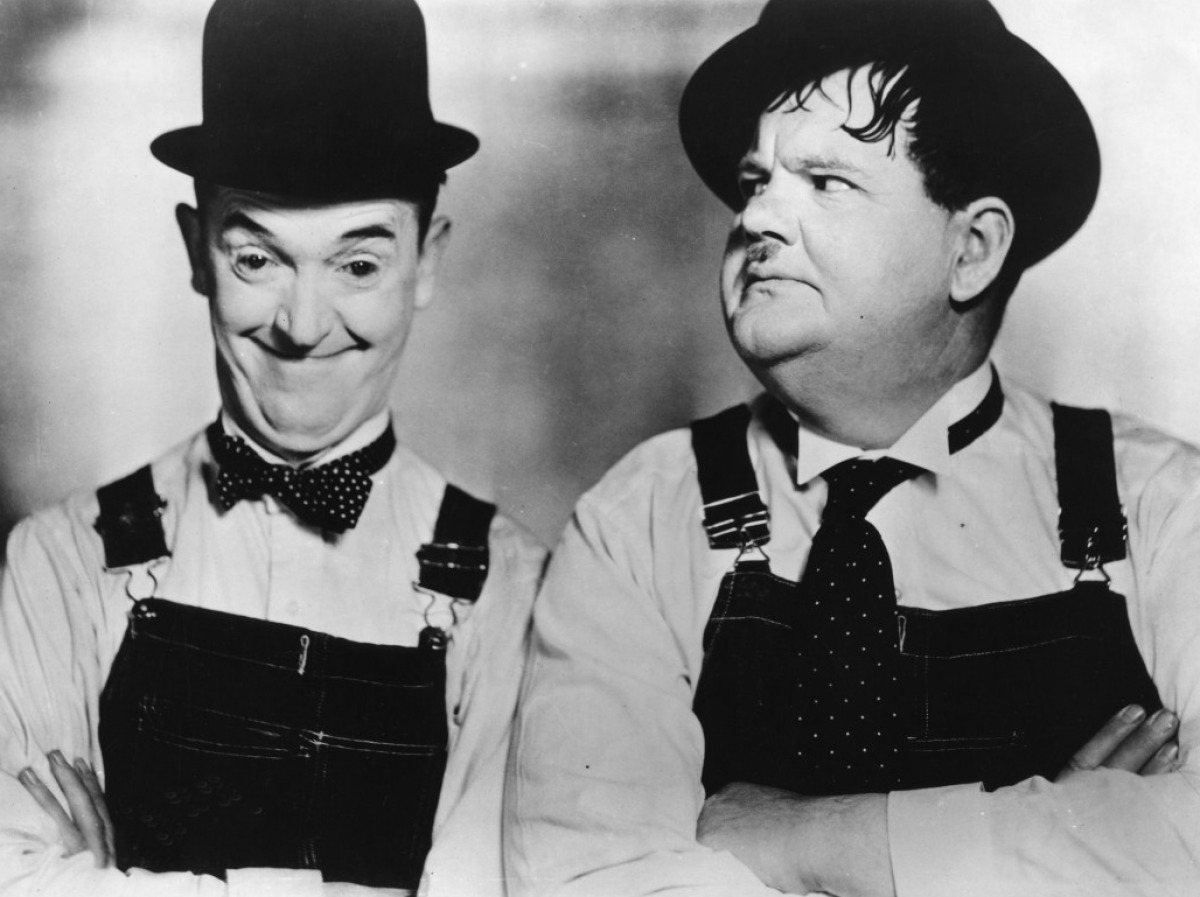
Stan & Ollie

Holy Moholy-Nagy

Hannah

El Hombre Invisible

Georges Simenon

Feed your ears...with peas, chicken and salt peanuts...


Sunday, 22 January 2012

Friday, 11 February 2011

Model Shop - Jacques Demy (1969)


The journey through Demyville continues. It’s quite a trip, and by now I wonder why he isn’t recognised, or as well-known, as he should be. Yes, he’s much-loved amongst film buffs, but to my mind he still doesn’t get the recognition he deserves.
   So here’s Lola again, and cars seem to be important to the men in her life, or perhaps they’re just important, symbolic even, to Demy. In ‘Lola’ we see her old flame come cruising into picture, then we see little of him until the end. It’s as if he spent the whole film just driving around Nantes, stopping only to get out and look at the posters outside the dancehall where Lola works. Now, in ‘The Model Shop’, we’re taken on a ride through the back roads of LA to start with, then through many streets with George in his MG. George is driving on borrowed time because the army want his ass for service in Vietnam, and the repo man wants his beloved car because he can’t keep up the payments. Meanwhile his girlfriend is about to break into advertising as a model. She says actresses have been spotted in adverts. I wonder if this is a reference to Godard’s first sighting of Anna Karina.
   George and his girl live in a modest wooden house with an oil derrick on their doorstep, almost literally. It instantly struck me as a strange choice of environment. These symbols of wealth are usually just that in film, but here it’s as if Demy is robbing them of their power and repositioning this one as little more than an ugly noise nuisance. Demy does strange things with sound during the film. At times, as George travels from place-to-place, there is a mechanical throbbing which appears to have no source. At one point the classical music that was on the car radio returns in a burst after he has turned it off.
   George, an architect without work, or belief in the job, views LA from on high at one point, whilst Demy sees it through foreign eyes, taking us on what are now time-travelling tours the way few filmmakers have done. It’s as if he’s engaging us the way he must have been engaged with the mythical city. But there are none of the typical self-mythologising shots of lights glittering like so many Hollywood stars. Here are the shop fronts, street corners and petrol stations, which are no less fascinating.
   The soundtrack, aside from the classical music, is from Spirit, who we meet rehearsing. Many of George’s friends are succeeding in the alternative culture. Others have their own newspaper. It’s all ‘happening’ for them, whilst George can only drive, trying to raise money so that he can keep driving. Then he sees Lola, by chance, and discovers she’s a model for anyone willing to hire a camera to snap her in naughty underwear. The first time he enters the labyrinth of the model shop is reminiscent of Travis Bickle’s trip through the corridors of sin. I can’t help thinking Scorsese was influenced/inspired by this scene. And again, like Travis with Iris, George would like to rescue Lola from the demeaning situation.
   Lola is a magnet to the lost. She is also incapable of saving them. She always has another place, another person calling her. This time it’s her son, back in France.
   What can George do? Soon he may be facing ‘Charlie’ in the jungle. I wouldn’t hold up much hope of him surviving. He might end up in a trench with the thousand-yard-stare....trying, perhaps, to see Lola, thousands of miles away in France...

Sunday, 16 January 2011

Lola – Jacques Demy, 1961


Her name is Lola, she is a showgirl...in Nantes...where sailors seek a good time on the town...and there’s even one called Frankie. He’s engaged, but that doesn’t prevent him from falling prey to the charms of Lola, who still carries a torch for her first love, and cannot return the depth of feeling Roland has for her...ah, Lola...naive, sentimental, seductive Lola...
   And then there is Cecile, just 14 and besotted with Frankie, who takes her on a fairground ride during which the cover rolls over and for a moment, in the darkness, she can fantasise that he is all hers. She is raised by her mother, who looks as if she has just stepped out of Vogue magazine circa 1955...she too has high hopes for love in the middle of her life, and the object of her affection is Roland, for whom Nantes has nothing to offer. He is made redundant, preferring a good book to punctuality. He will do anything to escape, even if it means taking a dubious assignment carrying a bag across continents...but he meets Lola, a childhood friend, and everything changes, so he hopes...
   But who is the stranger in a Stetson driving a flash American car into the opening frame? He appears again, but doesn’t interact with any of the characters until the story is almost over...
   As fate interweaves the live of these people Lola may be central to the story, yet Demy does not lessen the impact she has on others, never reduces them to mere extras. The sight of Roland’s solitary walk, suitcase in hand towards the harbour, is as powerful as anything else we see...so too is the yearning felt by Cecile’s mother...and of course, that magical fairground ride for Cecile...
   Lola’s song, Legrand’s music, American sailors...it feels like a rehearsal for the films that would follow. As the characters yearn for fulfilment we see Demy’s dream of what cinema can be beginning to take shape...his romance with Hollywood will blossom into a vision very much of his own making...unlike Cecile’s American dream...

Friday, 11 June 2010

Nouvelle Vague - Michel Legrand


Since this year is the 50th anniversary of ‘Breathless’ it only seems right to be enjoying a CD called ‘Nouvelle Vague’. From the first-rate Universal Music Jazz France soundtrack series, this collection covers work done for Jacques Demy and others as well as JLG, who can be heard talking before each track from ‘Une Femme est une Femme’. This would be great if I understood French...shame CDs don’t come with translation software. ‘Angela, Strasbourg Saint Denis’ is one of the great themes associated with JLG and it’s followed by Anna K singing, so, already it’s worth the money. ‘Hula-Hop’ from Francoise Reichenbach’s ‘L’Amerique Insolite’ is a sprightly gem, all jaunty jazz with scat vocals, but the later treat of the theme to ‘Vivre sa Vie’ just about tops everything in the tradition of heartbreakingly beautiful JLG themes. It ranks alongside Delerue’s music for ‘Le Mepris’ or Misraki’s ‘Alphaville’ soundtrack. In the middle there’s a clutch of songs from Agnes Varda’s ‘Cleo de 5 a 7’, vocals by Corrine Marchand...absolutely superb, especially the ballad, ‘La Joueuse’. ‘Roland reve’ from Demy’s ‘Lola’, is another heart-rending classic. Also included is piano trio work and the kind of jazz that Miles set the blueprint for with his French connection, so all-in-all it's diverse, sophisticated, light-hearted, poignant and further proof that Legrand was an amazing composer.


Monday, 2 November 2009

The Falling Leaves Drift By My Window...


The falling leaves drift by my window
The falling leaves of red and gold
I see your lips, the summer kisses
The sunburned hands I used to hold

Since you went away the days grow long
And soon I'll hear old winter's song
But I miss you most of all, my darling
When autumn leaves start to fall

Since you went away the days grow long
And soon I'll hear old winter's song
But I miss you most of all, my darling
When autumn leaves start to fall

I miss you most of all, my darling
When autumn leaves start to fall

- ‘Autumn Leaves’ (Korma/Mercer)


I was going to suggest that there are as many versions of the song ‘Autumn Leaves’ as there are examples of the real thing laying around on the road right now – but that would be a lie.
Perhaps there are as many recordings as there are leaves currently curled up in the branches of the tree outside my window; orphans being cradled in its spindly, naked arms having dropped from the London plane tree nearby.
The song itself was adopted in a way, being born from the pen of Joseph Kosma for the 1945 ballet ‘Le Rendez-Vous’ before Jaques Prevert added lyrics for the 1946 film ‘Les Portes de la Nuit’. A year later the great American writer Johnny Mercer put his own words to the tune that would become a standard for both vocalists and jazz musicians.
If I was foolish enough to second guess the version you know best I’d put my money on the Cannonball Adderley take for ‘Somethin’ Else’. Why? Just because I reckon you’re the type to realise that Adderley and Miles with Art Blakey in the driving seat is a line-up you couldn’t resist. I pay you that compliment without even knowing you. That’s how generous I am.
Then again, you could be a Matt Monro fan, but my guess here is that you really only dig ‘On Days Like These’ because it opens ‘The Italian Job’ so sublimely. Still, dismiss Matt with a wave of your hand if you like but I really enjoy him singing ‘Autumn Leaves’. Something in that rich voice evokes nostalgia in me for days I never really knew. Days in the 60s, when I was old enough to be married and live in a house with a bar for entertaining all my hip friends by mixing great cocktails to the sound of Matt Monro. But I’m not that old. And I’m not even married.
Mercer’s lyrics were never going to escape Sinatra’s tonsils, lungs and other essential parts in the process of singing. Was there a great song that he didn’t record? Do I really need to tell you that he does an amazing job? No, of course not, and when I listen it wrenches the romantic that lurks in a dusty corner of my soul right out into the light. So too does Paul Desmond on the session for his 1962 album, ‘Desmond Blue’. This has everything going for it, from the arrangement by Bob Prince to the flute-playing at the start, the strings and, of course, Desmond himself. Like Sinatra, he could deliver a melody like no-one else. In the mid-70s he would join Chet Baker for CTI and record another version which, despite being late in the day for both, proves they still had enough in the tank to show young ‘uns what Cool is all about.
Those great thinkers in the art of the eighty-eights, Keith Jarrett and Bill Evans, have applied their improvisational genius to it, but more surprisingly, so did Manfred Mann. Yes, you read right (here I give you no credit, thinking you know as little about MM as me, sorry). As well as penning the theme to ‘Ready Steady Go’ along with other 60s Pop-tastic hits, they can be found taking a brief (2min) trip on piano and vibes through ‘Autumn Leaves. I actually like this version, perhaps because it doesn’t attempt to improvise at any great length (were they capable?). Instead, at a steady, finger-snapping pace, it offers the kind of Soul-ful style that became so popular in that era. I could almost imagine a Mod being fooled by it, for a minute, and feeling slightly embarrassed when discovering it’s Manfred Mann.
Michel Legrand turned it into a theme for a film that never existed but, hearing it, I imagine myself dancing with Deneuve on a boulevard viewed through a lens by Jaques Demy.
Diamanda Galas shreds the song in her own inimitable, gothic horror fashion, ripping out its heart and gargling on the blood. If it evokes images of midnight churchyards and bats flapping around the belfry, we might also imagine poor Johnny Mercer there too, turning in his grave. The greatest songs are destined to become musical crime scenes at some point, but for as long as the leaves keep falling this time of year, people will be enjoying ‘Autumn Leaves’ it in all its guises.
Related Posts Plugin for WordPress, Blogger...